How to Choose a Korean Toner If You're Just Starting Out
A plain-language guide to picking your first K-beauty toner, with five options suited to different skin types and concerns.
Finding the best Korean toner for a beginner comes down to three things: your skin type, the texture you'll actually enjoy using, and an ingredient list that doesn't overcomplicate your new routine. The five toners here cover the main skin concerns — dryness, oiliness, sensitivity, and congested pores — so there's a clear starting point for most people.
Who This Guide Is For
If you're new to K-beauty and standing in front of a screen full of toners wondering where to begin, this guide is for you. Korean toners are not primarily astringents. They're generally the first hydrating or skin-prepping step after cleansing, and they set up everything that follows — serums, moisturizers, SPF — to absorb and perform better.
The best Korean toner for a beginner is one that's simple to use, suits your skin type, and doesn't require you to understand a dozen unfamiliar ingredients before you can start. The five toners below represent different textures and functions, so you can match the product to what your skin actually needs rather than buying the most popular one and hoping for the best.
What to Look for in a Korean Toner as a Beginner
Texture matters more than you think. Korean toners range from thin, almost-water consistencies to milky hybrids that blur the line between toner and light moisturizer. If you have oily or combination skin, a lightweight watery texture usually absorbs cleanly without contributing to excess shine. If your skin is dry or dull, a slightly richer or lotion-like texture can give you more of the nourishment you need in one step.
Fragrance is worth checking. If you're new to skincare or your skin reacts easily, starting with a fragrance-free formula removes one common variable. Fragrance doesn't bother everyone, but when you're building a routine from scratch, fewer potential irritants means it's easier to identify what's working and what isn't.
Look for calming and hydrating ingredients early on. Heartleaf (Houttuynia Cordata), Centella Asiatica, and panthenol are all widely used in Korean toners formulated for sensitive or reactive skin. Hyaluronic acid and ceramides support moisture and barrier function. These are low-risk ingredients for most skin types and a sensible foundation for any new routine.
Be thoughtful with active exfoliants. Some toners include fruit enzymes or mild exfoliating acids to address pore congestion or uneven texture. These can be useful, but if you're a beginner, you'll want to start slowly — a few times a week rather than daily — and pay attention to how your skin responds. If you have a damaged or irritated skin barrier, skip exfoliating toners entirely until your skin is stable.
Check the "safe during" notes if relevant. If you're pregnant, breastfeeding, post-procedure, or managing multiple sensitivities, some brands provide specific guidance on suitability. Check the brand's current guidance, ask your doctor, and patch test before use.
The Picks
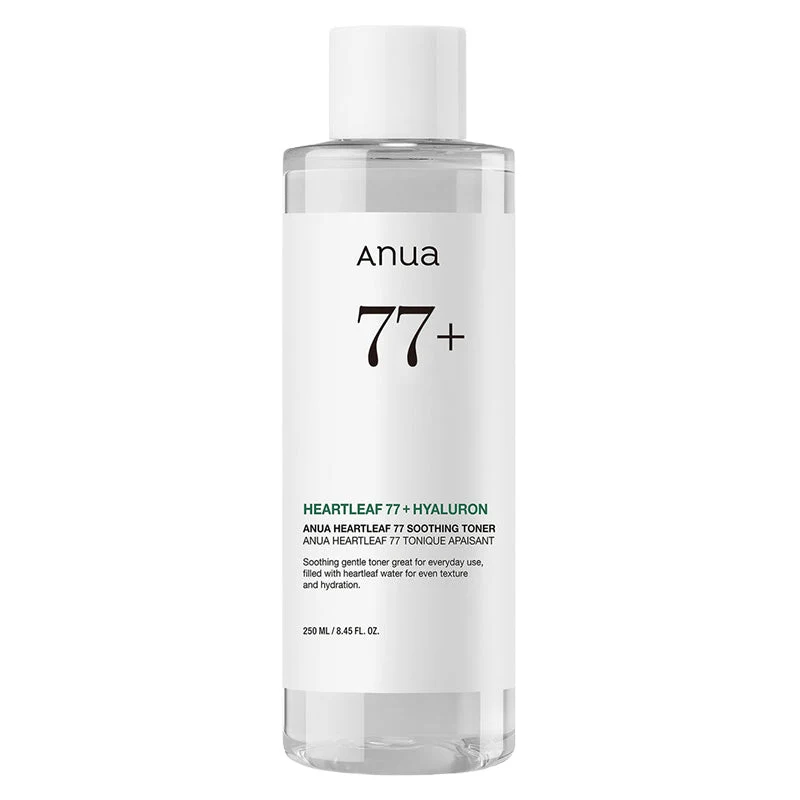
For reactive, redness-prone skin: Anua Heartleaf 77% Soothing Toner
This is a good fit if your main concern is redness or sensitivity and you want something uncomplicated. According to the brand, the formula is 77% Houttuynia Cordata Flower/Leaf/Stem Water — meaning the majority of what you're applying is the calming botanical ingredient itself, not just a trace amount. Panthenol and Centella Asiatica Extract round out the formula, and a seven-type hyaluronic acid complex provides hydration without heaviness.