How to Choose a Korean Toner for Combination Skin
A practical guide to finding the right toner texture, ingredients, and routine fit when your skin is both oily and dry at once.
Finding the best Korean toner for combination skin means balancing two competing needs: calming excess oil in the T-zone while keeping drier cheeks comfortable. Look for lightweight, water-based formulas with soothing botanicals, gentle humectants, and no heavy occlusive ingredients. The five picks below cover everything from pore care to barrier support.
Who This Guide Is For
Combination skin is easy to recognize and surprisingly hard to shop for. Your forehead, nose, and chin get shiny by midday while your cheeks feel tight or occasionally flake. A toner designed for oily skin often leaves dry patches uncomfortable; one made for dry skin tends to feel heavy in the areas that produce the most sebum. If that push-pull sounds familiar, this guide is for you.
Korean toners tend to work well for combination skin because the category itself is broad. Korean toners range from watery essences and pH-balancing liquids to creamy skin-prep hybrids, giving you several textures to choose from.
What to Look for in a Toner for Combination Skin
Texture first. A water-type or near-water texture absorbs quickly and delivers hydration without feeling heavy on oily zones. If your dry areas are genuinely parched, a thin lotion-type formula can be layered without congesting pores. Avoid thick, occlusive toners with significant oil content — they tend to sit on top of the T-zone rather than absorb evenly.
Ingredient priorities. Humectants like glycerin, hyaluronic acid, betaine, and panthenol draw water into the skin without adding weight. Soothing botanicals — centella asiatica, houttuynia cordata, licorice root — help with the redness that often accompanies the oily zones of combination skin. Ceramides are worth considering when the barrier feels compromised. Gentle exfoliating or sebum-dissolving ingredients, like fruit enzymes, can help keep pores clear in the T-zone without drying out the rest of the face.
Ingredients to approach carefully. Fragrance, including essential oils, can be irritating on skin that already has reactive patches. Heavy alcohols and strong astringents may over-strip. If your combination skin also leans sensitive, fragrance-free formulas reduce the risk of reactivity across both dry and oily zones.
Frequency and function. Some toners are designed for daily use morning and night; others are treatment steps used a few times a week. Knowing which role a toner plays in a routine helps you decide where it fits rather than expecting one product to do everything.
The Picks
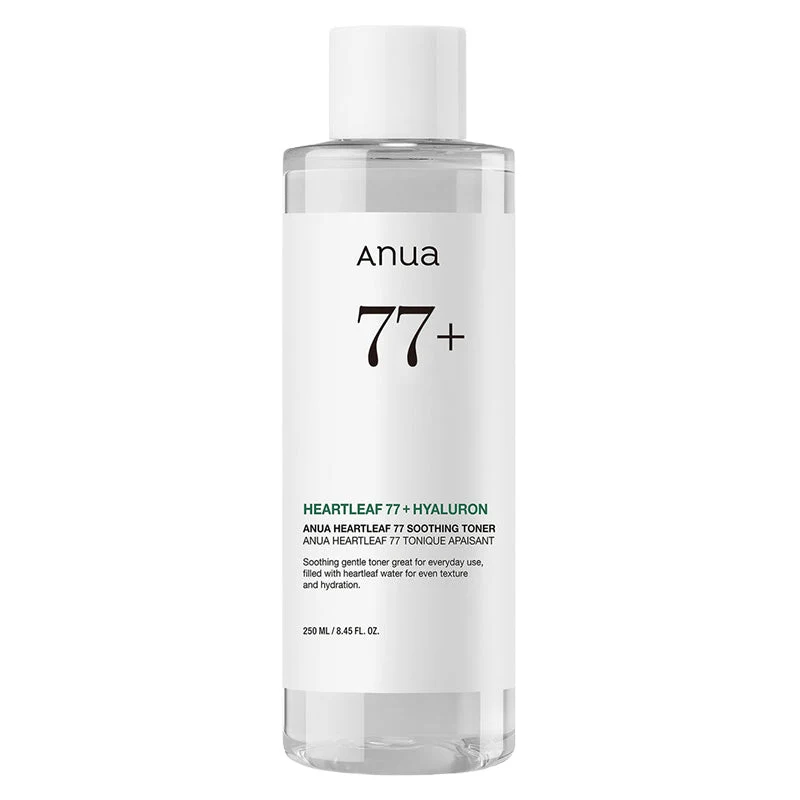
Anua Heartleaf 77% Soothing Toner — For reactive combination skin
According to the brand, this toner is 77% Houttuynia Cordata Flower/Leaf/Stem Water, a high proportion of botanical base rather than plain water. Panthenol and a multi-type hyaluronic acid complex provide lightweight hydration, and the formula is fragrance-free. It absorbs fast and works well as a first toning step that calms redness across the whole face before you address specific zones with subsequent products. If you are pregnant, breastfeeding, recovering from a procedure or using prescription skincare, check the brand's current guidance and ask your doctor.